
Planning a Concrete Patio Extension in Conroe and The Woodlands, TX
Learn how to plan a concrete patio extension in Conroe and The Woodlands, TX, including slab assessment, drainage, finish matching, and estimates.
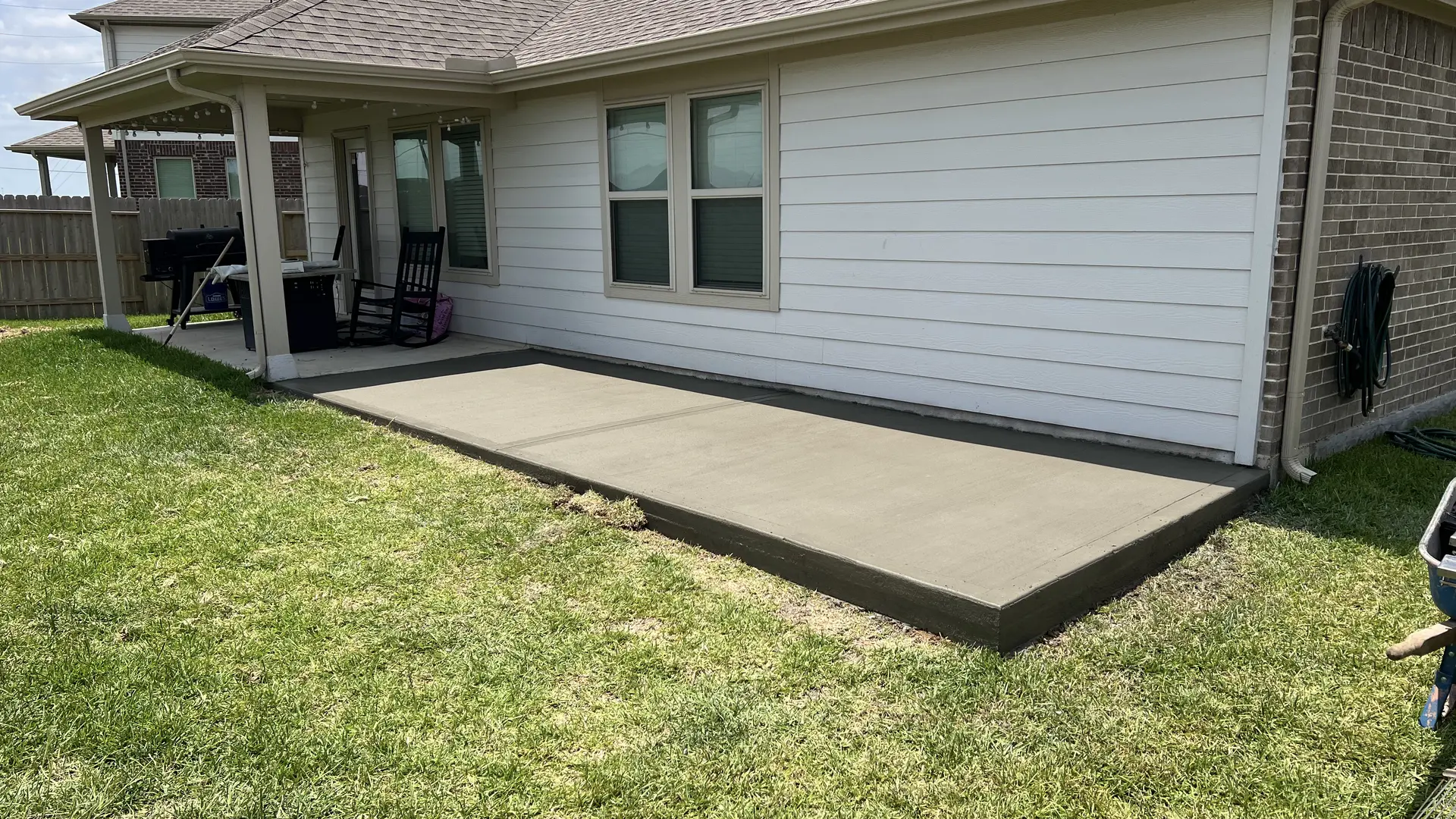
If your current patio is too small for the way you use your backyard, extending it may be more practical than tearing it out and starting over. Before requesting a quote, it helps to understand how a contractor evaluates the existing slab, plans drainage, and matches the new concrete to the original surface.
For homeowners in Conroe, The Woodlands, and surrounding Montgomery County communities, the right approach depends on the patio's condition, your property's grade, and the finish you want.
Creative Concrete Designs offers concrete patio installation, stamped concrete, decorative overlays, staining, and sealing throughout the area.
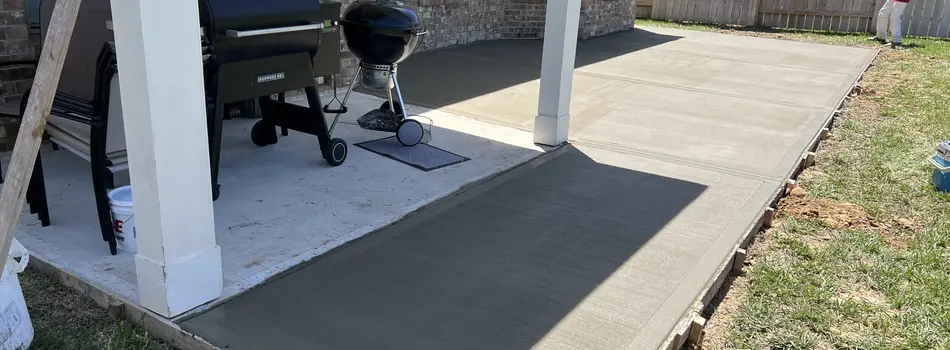
Define Your Patio Extension and Assess the Existing Slab
Before concrete work begins, think about how you want to use the additional space.
A dining area, outdoor kitchen, grilling station, or extra seating can each require a different layout. Consider furniture dimensions, walking space, and how the extension will connect to your yard.
The condition of the existing patio is just as important.
Creative Concrete Designs begins patio extension planning by assessing the original slab and surrounding site conditions.
The company's published installation process describes doweled connections and isolation joints for tying new concrete into existing surfaces. The appropriate reinforcement and joint arrangement should be determined for the specific project so the old and new concrete can accommodate movement as designed.
Existing cracks, settlement, drainage problems, and damaged concrete may require additional evaluation before the extension is planned.
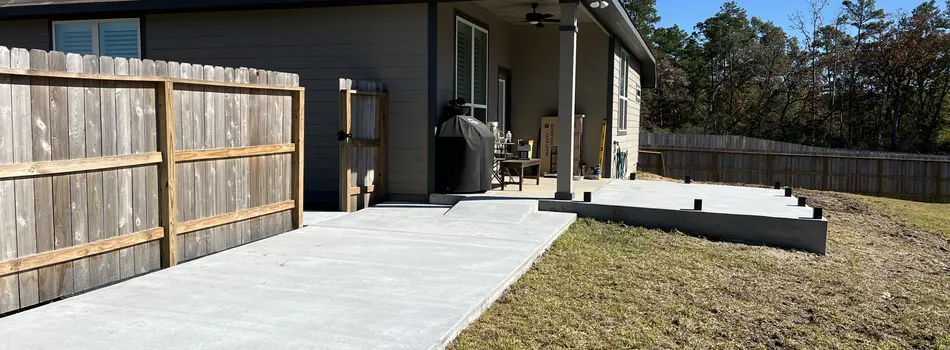
Plan Drainage Before Choosing a Finish
Proper drainage is one of the most important parts of a successful patio extension.
If the new concrete directs water toward your home or creates low areas where rainwater collects, the finished patio may develop drainage problems.
Creative Concrete Designs plans patio grading to direct surface water away from the foundation.
The company's patio installation guidance describes a minimum slope of 1/8 inch per foot. However, the appropriate slope for an individual project may differ depending on existing elevations, drainage conditions, applicable requirements, and the approved design.
Before installation, ask your contractor:
- Where will rainwater flow after the extension is complete?
- Will the new concrete create any low spots against the existing patio?
- Does the project require grading or additional drainage work?
- How will the finished elevation connect to doors, walkways, and landscaping?
Addressing these questions before the concrete is poured can help prevent drainage problems that are difficult to correct later.
Matching Your Existing Patio's Finish
Matching new concrete to an older patio requires planning, especially when the original surface has been exposed to years of sunlight and weather.
A traditional broom finish is generally easier to coordinate than a complex stamped pattern.
For homeowners choosing stamped concrete, pattern alignment, texture, color, and the transition between slabs should be discussed before installation.
Even when the contractor uses similar materials and finishing methods, newly poured concrete may initially look different from the older surface.
Weathering and existing sealers can also affect how closely the colors match.
A professional assessment can help set realistic expectations for the finished appearance.
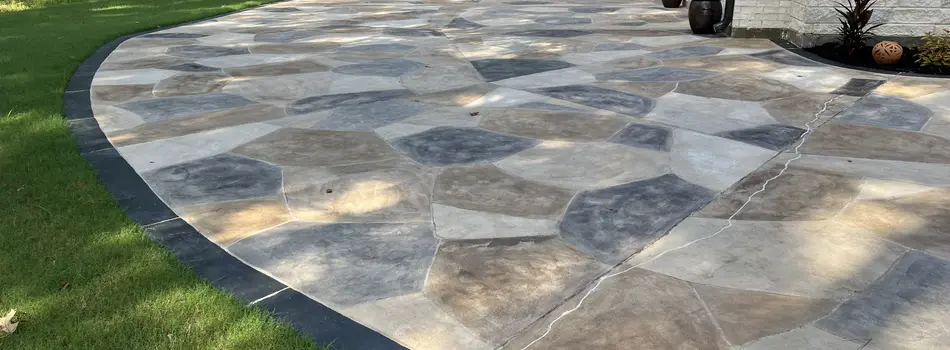
When a Stamped Overlay May Be a Better Alternative
Not every homeowner needs additional patio square footage.
If your existing patio is large enough but looks worn or outdated, a decorative overlay may be worth considering.
Creative Concrete Designs offers stamped concrete overlays that create stone, slate, brick, or other decorative patterns over suitable existing concrete.
Unlike a patio extension, an overlay does not increase the patio's footprint. Instead, it changes the appearance of the existing surface.
The underlying concrete must be structurally suitable for resurfacing. Significant cracking, settlement, or deterioration may require repairs or replacement rather than an overlay.
If your main goal is improving appearance instead of adding space, discussing both options during your estimate can help you avoid unnecessary construction.
What to Compare When Requesting Patio Extension Estimates
Concrete patio pricing depends on more than square footage.
Two estimates may look similar initially but include different preparation, reinforcement, drainage, or finishing work.
When comparing quotes, ask each contractor to explain:
- Patio size and layout: Total square footage and the proposed extension footprint
- Site access: Whether equipment and materials can reach the work area
- Excavation and grading: How the site will be prepared and drainage addressed
- Base preparation: The work needed to support the new concrete
- Reinforcement and joints: How the new section will be constructed alongside the existing patio
- Decorative finish: Broom, stamped, or other available finish options
- Additional work: Whether demolition, disposal, repairs, or sealing are included
A detailed, itemized estimate makes it easier to compare the actual work instead of choosing based on one price per square foot.
Check Property Approvals Before Installation
Homeowners in The Woodlands should review applicable property improvement requirements before scheduling construction.
According to The Woodlands Township's permitting process, residential improvements generally require prior written approval unless they fall under an applicable pre-approved category.
Neighborhood-specific criteria may also affect setbacks, materials, hard-surface coverage, and other design details.
Requirements vary by property, so homeowners should confirm whether their particular patio extension requires approval before construction begins.
Properties in Conroe or other Montgomery County communities may have different municipal, neighborhood, or deed-restriction requirements.
How Long Before You Can Use Your New Patio?
Concrete requires time to develop strength after placement.
Creative Concrete Designs provides the following general return-to-use guidance for new patios:
- Light foot traffic: Approximately 24–48 hours
- Patio furniture: Approximately 3–5 days
- Heavy installations or equipment: Wait for the full 28-day curing period, subject to the project's requirements
These are general guidelines rather than guaranteed timelines for every installation.
Weather, concrete mix, finish, and project conditions can affect curing and scheduling.
Heavy features such as outdoor kitchens or hot tubs should also be considered during the original design because they may require additional structural support.
Always follow your contractor's project-specific instructions before placing furniture or heavy equipment on the new concrete.
Plan Your Concrete Patio Extension With Creative Concrete Designs
Whether you want more room for outdoor entertaining or a decorative update to your existing patio, planning starts with understanding the condition of your concrete and the layout of your property.
Creative Concrete Designs provides patio installation, extensions, stamped concrete, and decorative overlays for homeowners throughout Conroe, The Woodlands, and Montgomery County.
The team offers free, no-obligation estimates to help homeowners review project scope, preparation requirements, finish options, and scheduling.
Call (832) 898-3473 or contact Creative Concrete Designs to schedule a site assessment and discuss your patio project.