
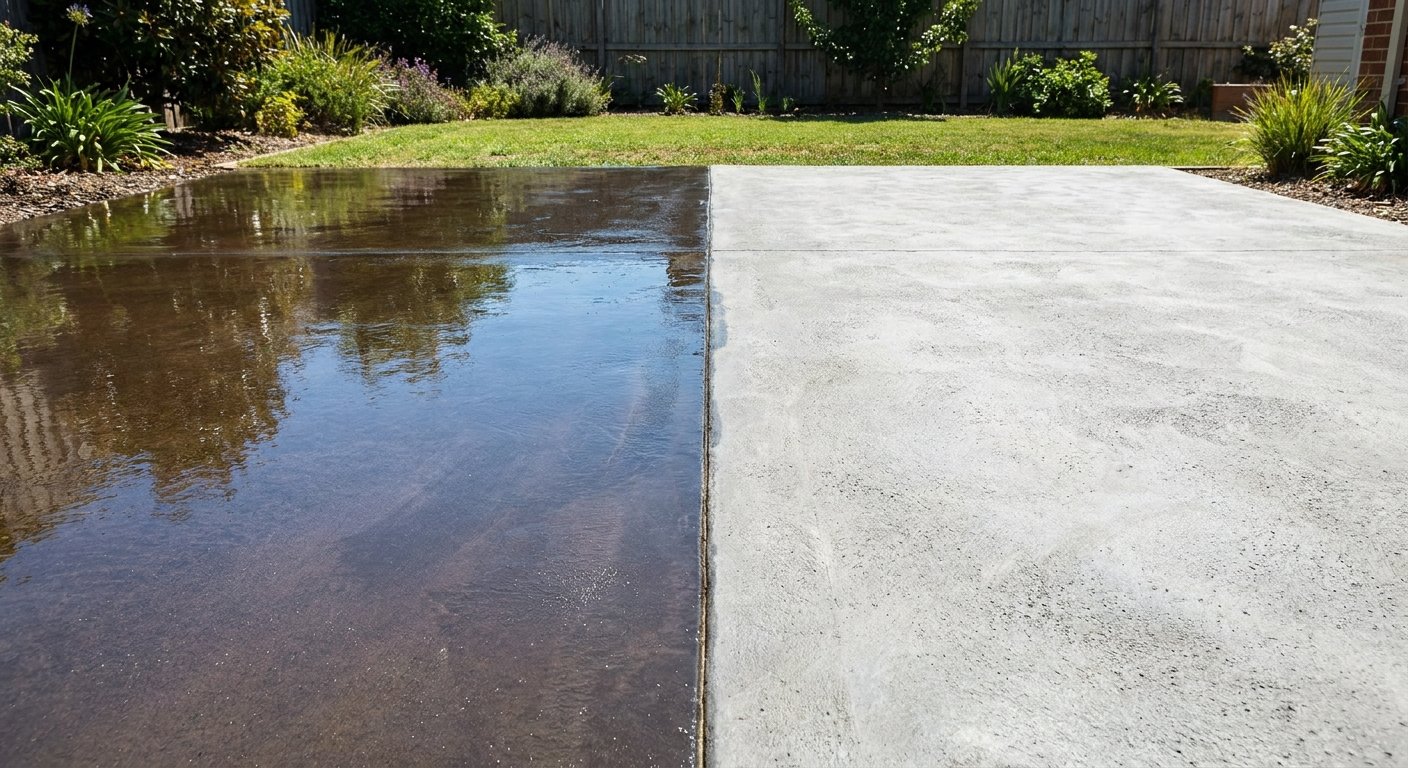
How long concrete sealer lasts depends mostly on the type. Topical acrylic sealer holds up about 1 to 3 years, while penetrating silane or siloxane sealer can last 5 to 10, and both run shorter in hot, humid Texas weather. At Creative Concrete Designs, the firefighter-owned team handles concrete sealing across Montgomery County homes, where sun and moisture wear sealers down faster than bucket labels suggest.
It is easy to assume sealing concrete is a one-and-done job, but no sealer is permanent, and that assumption leaves Texas slabs unprotected for years. Every sealer has a service life, and once it wears off the concrete is back to soaking up water, stains, and UV. Each sealer type has its own clock, and Texas weather decides how quickly that clock runs down.
How Long Concrete Sealer Lasts by Type

The biggest factor in lifespan is whether the sealer sits on top of the slab or soaks into it. Here is how the common types compare:
Sealer Type
Typical Lifespan
Notes
Acrylic (topical)
1–3 years
Affordable, enriches color, wears fastest
Polyurethane (topical)
4–8 years
Tougher film; UV-stable versions for sun
Silane/siloxane (penetrating)
5–10 years
Soaks in, invisible, breathable protection
Epoxy
5–10 years
Hard but not UV-stable; for indoor use
Topical sealers give the wet look many homeowners want but trade longevity for it, while penetrating sealers last longest because UV and traffic cannot wear away a film that is not on the surface.
What Texas Heat and Humidity Do to Sealer

Local conditions pull most sealers toward the short end of their range:
- Intense UV: summer sun breaks down topical films and is why non-UV-stable sealers fail outdoors.
- Heat: high surface temperatures soften and stress topical sealers, especially on full-sun slabs.
- Humidity and moisture: vapor moving through the slab can cloud or lift a topical sealer from below.
- Heavy rain: 50-plus inches a year keeps washing at the surface and speeds wear.
These stresses hit hardest on exposed flatwork, which is why a sun-exposed concrete driveway in full sun usually needs resealing sooner than the sealer's rated lifespan implies.
Signs Your Concrete Sealer Has Worn Off

Rather than counting years, watch the surface for these cues that the protection is gone:
- Water soaks in instead of beading up and sheeting off.
- The surface looks dull and faded where it once had sheen or richer color.
- Stains set in more easily, from oil, leaves, or hard-water spots.
- A topical sealer shows white blush, cloudiness, or flaking as it breaks down.
The same water test works on a concrete patio or any sealed slab. When the beading stops, it is time to reseal before stains and moisture get a foothold.
For concrete sealer checks in Willis, the same water test helps separate normal dulling from a surface that is ready to absorb stains.
Frequently Asked Questions
How long does concrete sealer last in Texas?
It depends on the sealer. Topical acrylic sealers last about 1 to 3 years, polyurethane sealers about 4 to 8, and penetrating silane or siloxane sealers about 5 to 10. In hot, humid Texas weather, intense UV and moisture push most sealers toward the shorter end of their range, so full-sun surfaces often need resealing sooner than the label suggests.
How do I know when to reseal my concrete?
The simplest test is to splash water on the surface. If it beads up, the sealer is still working; if it soaks in and darkens the concrete, it is time to reseal. Other signs include a dull, faded look, easier staining, and white cloudiness or flaking on a topical sealer. In Southeast Texas, checking once or twice a year keeps you ahead of it.
Does penetrating sealer last longer than topical sealer?
Yes, penetrating silane and siloxane sealers generally last longer, about 5 to 10 years, because they soak into the concrete and protect from within rather than forming a film on top. Topical acrylic sealers last only about 1 to 3 years since UV, heat, and traffic wear the surface layer away. Penetrating sealers are invisible, while topical sealers add the wet-look sheen some homeowners prefer.
Keeping Your Concrete Protected in Texas

Concrete sealer is a maintenance item, not a one-time fix, and its life ranges from a year or two for topical products to a decade for penetrating ones. In hot, humid Texas weather, the smartest approach is to match the sealer to the surface, lean on a quick water test between visits, and reseal as soon as the beading stops rather than waiting for stains and wear to set in.
If you are not sure what sealer is on your concrete or when it was last done, the firefighter-owned team at Creative Concrete Designs can inspect it and reseal it right in Conroe, Montgomery, and The Woodlands. Use the Creative Concrete Designs contact page or call 832-898-3473 to get started.