
In Southeast Texas, you should plan to seal a concrete driveway about every one to two years. That is tighter than the national every-two-to-three-year guideline because relentless UV, 50-plus inches of annual rain, and expansive clay soil all age a slab faster here. Creative Concrete Designs handles concrete driveway sealing across Montgomery County, where the firefighter-owned crew sees full-sun pavement betray a skipped cycle within months.
Let a driveway go unsealed for too long and the consequences are not just cosmetic. UV chalks and fades the surface, rain drives moisture into the concrete, and the slab grows more vulnerable to scaling, staining, and the cracking that clay-soil movement already encourages. The fix is refreshingly simple, since a regular resealing schedule heads off nearly all of it. Resealing intervals pair with the wear signs that show when Texas weather has caught up to a slab.
How Often to Seal a Concrete Driveway in Southeast Texas

The right interval depends mostly on the type of sealer on the slab:
- Acrylic and other topical sealers: every 1 to 2 years, since they form a thin surface film that UV and tire traffic wear down.
- Penetrating silane or siloxane sealers: every 5 to 10 years, because they soak in and protect from within rather than sitting on top.
- Heavy-use or full-sun driveways: toward the shorter end of either range, as exposure and traffic accelerate wear.
National guides often say every two to three years, but that advice is written for milder climates. For concrete driveway surfaces in this region, a one-to-two-year topical cycle is the safer default.
What Makes a Texas Driveway Need Sealing Sooner

Several local conditions stack up to shorten the resealing interval here:
- Intense UV: summer sun breaks down topical sealer and fades the surface faster than in cooler regions.
- Heavy rainfall: 50-plus inches a year keeps moisture cycling through the slab and washes at the sealer.
- Expansive clay soil: vertisols swell and shrink with moisture, stressing the slab and any film on top.
- Daily traffic: tires abrade the wear surface, thinning sealer where vehicles roll most.
- Sealer quality: a budget product wears off long before a UV-stable sealer rated for sun would.
A driveway that bakes in full afternoon sun and carries two vehicles daily usually needs resealing sooner than a shaded, lightly used slab.
Signs Your Driveway Is Due for Resealing

You do not have to track the calendar perfectly, because the slab tells you when it is time:
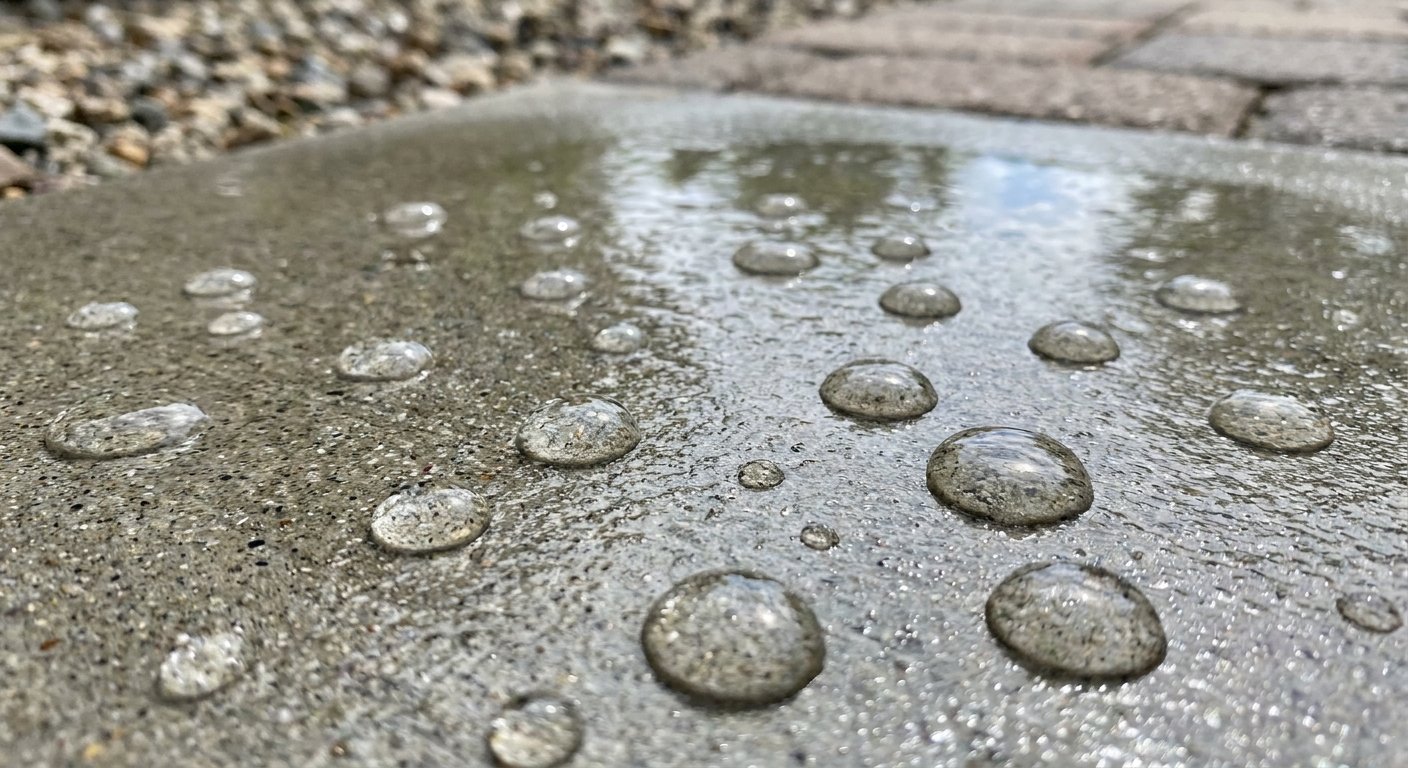
- Water no longer beads: it soaks in and darkens the concrete instead of sheeting off.
- The surface looks chalky, dull, or faded compared to when it was last sealed.
- Stains set in more easily, with oil or leaf marks that did not used to stick.
- The finish feels rough or shows light surface scaling underfoot.
The same beading test works on a patio, which is why we check both the driveway and any adjoining concrete patio on the same visit. Catching these signs early keeps a quick reseal from turning into a repair.
For driveway resealing visits in Montgomery, the beading test is often the fastest way to decide whether a full-sun slab needs a fresh coat before storm season.
Frequently Asked Questions
How often should you seal a concrete driveway in Texas?
In Southeast Texas, plan to reseal a concrete driveway about every one to two years if it has a topical acrylic sealer, since UV, heavy rain, and traffic wear that film down quickly. Penetrating silane or siloxane sealers can last five to ten years because they soak into the slab. Full-sun, high-traffic driveways should be resealed toward the shorter end of the range.
What happens if you never seal a concrete driveway?
An unsealed concrete driveway absorbs water and stains more readily, fades and chalks under UV, and is more prone to surface scaling and cracking, especially over the expansive clay soils common in Montgomery County. Sealing slows moisture movement and protects the surface, extending the life of the slab. Skipping it entirely shortens that life and makes stains and wear permanent.
Can you reseal a concrete driveway yourself?
You can apply a consumer sealer yourself, but the result depends heavily on surface prep, weather timing, and choosing a UV-stable product suited to Texas sun. A poor application can trap moisture or peel within months. Many homeowners have it done professionally to get the prep, product choice, and even coverage right the first time.
Staying Ahead on Texas Driveway Sealing

Sealing is the cheapest insurance a concrete driveway gets in this climate. A one-to-two-year cycle on topical sealers, a longer one on penetrating products, and a quick beading test between visits will keep the surface protected against the UV, rain, and clay movement that define Southeast Texas.
If your driveway is overdue or you are not sure what sealer it has, the firefighter-owned team at Creative Concrete Designs can inspect it and reseal on the right schedule in Conroe, Montgomery, and The Woodlands. Use the Creative Concrete Designs contact page or call 832-898-3473 to get started.